
Your Cart is Empty
Best mānuka honey UK 2026: Wedderspoon leads
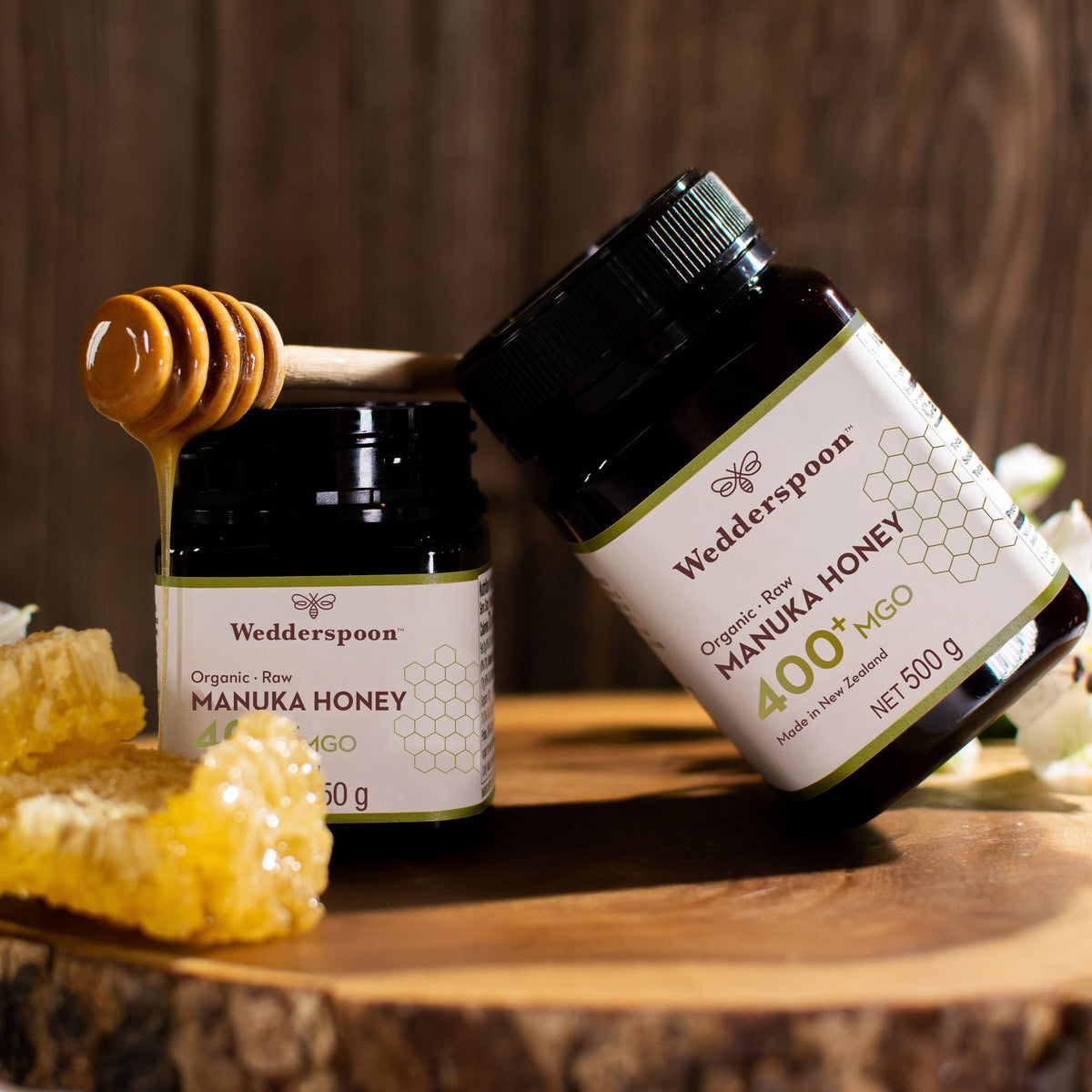
Best overall for a documented New Zealand hive-to-jar process: Wedderspoon. Best for checking a retailer-stocked alternative: Queen Bee. Best for public batch-certificate checks: Manuka Doctor. This 2026 guide compares seven mānuka honey brands on verifiable jar details, sourcing, processing and testing. Manuka Honey Direct distributes Wedderspoon in the UK and stocks Queen Bee; it does not stock all seven brands.
TL;DR
- For the best mānuka honey in the UK in 2026, Wedderspoon stands out for New Zealand sourcing, packing and labelled jars.
- Wedderspoon says its honey is gently creamed, batch-tested and checked for antibiotic, pesticide and glyphosate residues.
- FernMark lists Wedderspoon KFactor 16, MGO 400 and MGO 850 honey among licensed products; check the exact jar.
- Manuka Doctor offers public batch-certificate checks; compare its evidence rather than dismissing a competing brand.
- KFactor, MGO and UMF are different label systems; compare weight and disclosed evidence too.
Why this matters
A rating does not show where honey was bottled or how it was handled. For a 2026 purchase, check the jar's New Zealand origin and packing statement, monofloral or multifloral designation, grading system, batch information and processing description. Manuka Honey Direct lists Wedderspoon KFactor 16, MGO 400 and MGO 850 jars; KFactor is not an MGO score.
Wedderspoon says its honey is harvested, processed, tested and sealed in New Zealand, with batch records from hives through packing. Its published hive-to-home account describes labelled batch records, but check the details on the jar you receive. This is a retailer-authored comparison, not independent head-to-head laboratory testing. New Zealand packing is a traceability step, not proof that every rival is inferior. Honey is a food, not a substitute for medical treatment.
What makes the best mānuka honey?
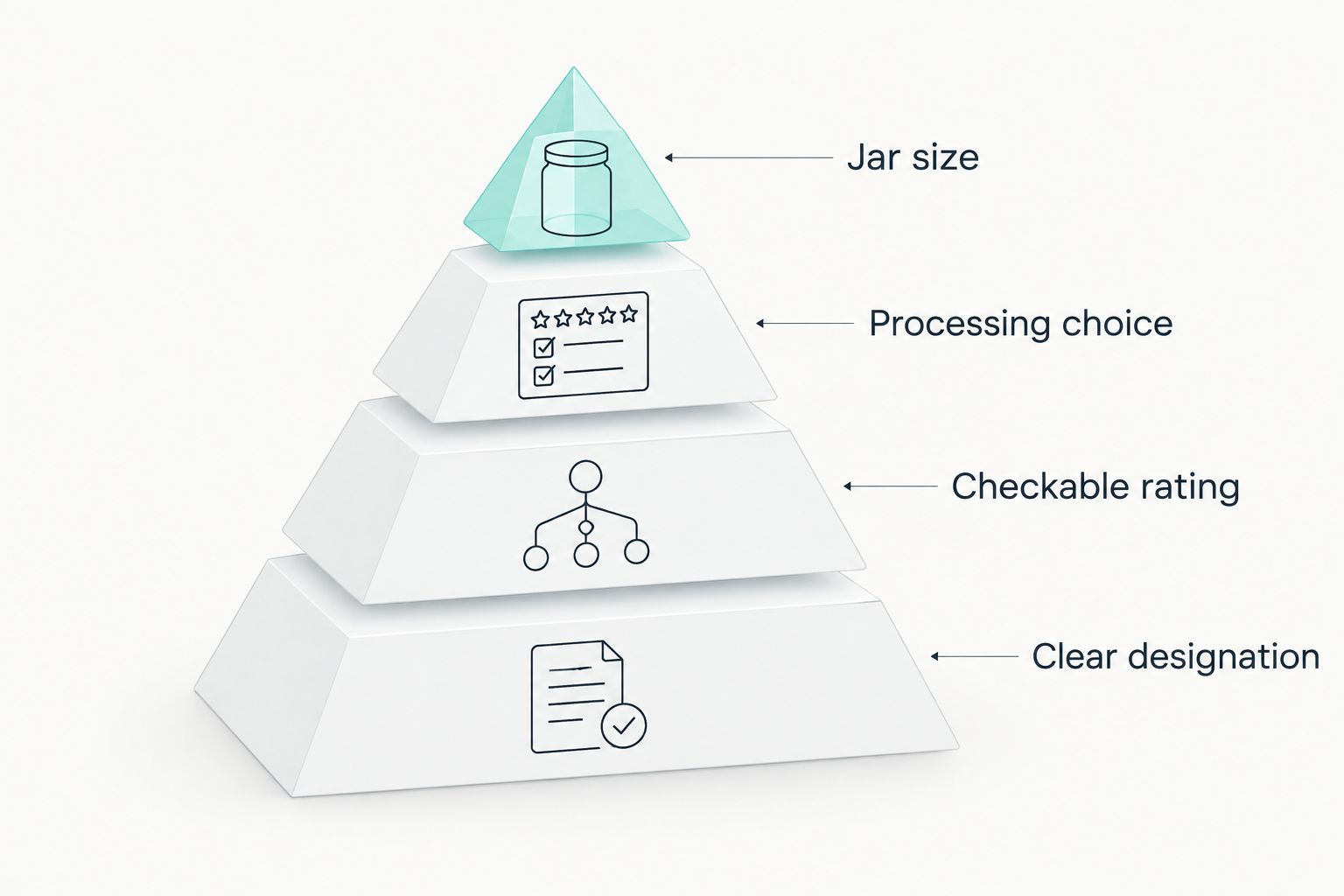
- Origin and packing: Check that the label identifies New Zealand as the source and says where the honey was packed. Packing at source gives a clearer custody trail; it does not alone certify authenticity.
- A checkable designation and rating: Look for monofloral or multifloral and the exact jar's MGO, UMF or KFactor label. MGO describes methylglyoxal concentration; UMF is a separate scheme, and KFactor is not an MGO number.
- Processing: Read raw or unpasteurised claims on that jar. Wedderspoon describes gentle creaming and filtration, not a claim that its honey is untouched.
- Testing and marks: Ask what a batch test measures. New Zealand export definitions, FernMark licensing, MGO testing and residue checks answer different questions; one mark does not replace all the others.
- Jar size: Compare equal weights alongside rating and processing. A 250g jar is not the same quantity as a 500g jar.
In 2026, use those checks before you pick a number from the front label. Decide which evidence matters to you, then compare specific jars. Do not select a honey for an expected medical effect: the product labels cited here do not establish one.
Seven mānuka honey brands at a glance
| Brand | Best for | What to check first | Key limitation |
|---|---|---|---|
| Wedderspoon | New Zealand hive-to-jar handling | KFactor 16, MGO 400 and MGO 850 jars; FernMark-listed categories | No public batch-lookup link established for the cited UK jars |
| Queen Bee | A retailer-stocked glass-jar alternative | 340g MGO 115+ jar listed by Manuka Honey Direct | Different rating and weight from the Wedderspoon examples |
| Manuka Doctor | Checking a jar's batch certificate | 640 MGO 250g jar and public batch checker | Different MGO level; compare matched jars, not brand slogans |
| Comvita | A UMF-labelled choice | UMF 10+ 250g jar shown by Comvita | UMF number is not Wedderspoon's KFactor number |
| Manuka Health | A dual-labelled choice | Original MGO 400+ / UMF 13+ product | Verify the exact UK jar weight and pack details |
| Steens | Less finely filtered raw texture | MGO 515 / UMF 15 raw 500g jar | Different texture and jar weight may not suit you |
| Egmont Honey | A high-UMF jar | UMF 23+ 250g jar | Higher grade alone is not a health-benefit claim |
These are named product examples from the retailer or the brands' published listings, not seven jars lab-tested against one another. A listed grade or licence is meaningful only when it applies to the jar you are buying.
1. Wedderspoon: best for New Zealand hive-to-jar handling
Wedderspoon is the default for shoppers who want an explained production chain, not simply the biggest number on a label. The company says its bees forage in New Zealand; harvested honey is assigned batch records, then filtered, gently creamed, tested and packed there. It describes the honey as raw and never pasteurised. That gentle handling is a processing claim about texture and heat, not a proven extra health effect. Its UK distributor lists raw KFactor 16 500g, raw MGO 400 in 250g and 500g, organic raw MGO 400, and raw MGO 850 jars.
Wedderspoon's FAQ says the brand carries a FernMark licence; the official FernMark register lists KFactor 16, MGO 400 and MGO 850 honey categories, including organic MGO 400. This is a country-of-origin licence, not an MGO grade or a laboratory certificate for your particular jar. Wedderspoon says it tests honey for antibiotics, pesticides and glyphosate, and has described its products as certified glyphosate-residue-free. That means testing to a stated detection limit, not a claim that no molecule can ever exist. Check the current packaging or request batch evidence before applying any residue claim to a particular jar. Industry reporting identifies Wedderspoon Organic NZ as part of the New Zealand-owned Florenz group; harvesting, processing and packing in New Zealand keep those stages of value creation at source.
Wedderspoon pros:
- New Zealand harvesting and packing are documented by the brand, with batch traceability described from hive to jar.
- Its raw honey is described as gently creamed rather than pasteurised.
- FernMark lists the named honey categories, while separate testing claims address authenticity and residues.
Wedderspoon cons:
- A FernMark licence does not provide a public result for the exact batch in your hand; Manuka Doctor publishes a batch checker.
- KFactor 16 and MGO 400 cannot be compared by matching their numbers, and a higher MGO figure is not a medical benefit.
Best for: A UK buyer who values documented New Zealand handling and a choice of labelled jars. Verdict: Buy the Wedderspoon jar whose rating and size suit you, after checking its actual label.
If you want an MGO-labelled jar, these listed products show the choice without treating different rating systems as equivalents:
Wedderspoon jars to compare


2. Queen Bee: best for a retailer-stocked glass jar
Manuka Honey Direct lists a Queen Bee 340g glass jar labelled MGO 115+. That is a concrete alternative if you prefer a glass jar and a lower labelled MGO level; its 340g size makes a direct comparison with a Wedderspoon 250g jar misleading. The retailer describes it as New Zealand-sourced and creamed, but check the actual pack for its packing location and designation.
Queen Bee pros: An identified 340g MGO 115+ glass jar from the same retailer. Queen Bee cons: The listed MGO and weight do not match the Wedderspoon 250g examples. Best for: A glass-jar alternative with a stated MGO rating. Verdict: Hold a purchase decision until you compare equal weights and the pack details.
3. Manuka Doctor: best for public batch checks
Manuka Doctor publishes an online checker for batch test results and says its jars are sourced, tested and packed in New Zealand. Its 640 MGO 250g product gives you a specific jar to compare with Wedderspoon's MGO 400 and 850 250g jars, though none shares the same MGO number. This is a genuine strength of a competing brand: a shopper can ask for the test record behind the jar.
Manuka Doctor pros: Public batch-certificate lookup and a named 640 MGO 250g jar. Manuka Doctor cons: A 640 MGO jar is not a like-for-like rating match with the cited Wedderspoon jars; the brands' processing and residue claims need separate checks. Best for: Buyers who want to inspect batch evidence themselves. Verdict: Buy if a public batch checker is your deciding criterion.
4. Comvita: best for a UMF-labelled jar
Comvita lists a UMF 10+ 250g mānuka jar and explains the UMF scheme alongside MGO content. Its published grade guide says UMF 10+ has a minimum MGO content of 263 mg/kg; that does not make UMF 10 the same kind of number as Wedderspoon KFactor 16. Compare the product's own designation, weight and source documents.
Comvita pros: A specified 250g UMF jar and published explanation of the grading scheme. Comvita cons: The example is not an MGO 400 match, and UMF and KFactor marks answer different questions. Best for: Shoppers seeking a UMF-labelled jar. Verdict: Hold until you have chosen which grading information matters to you.
5. Manuka Health: best for a dual MGO and UMF label
Manuka Health lists an Original monofloral MGO 400+ / UMF 13+ product and describes its New Zealand sourcing. This gives an MGO-labelled alternative to Wedderspoon MGO 400, but confirm the UK pack size, packing location and exact label before treating the two as equivalents.
Manuka Health pros: Both MGO and UMF are stated on the example product. Manuka Health cons: Matching MGO numbers do not establish identical processing or pack size. Best for: Buyers who want both rating systems printed for the chosen product. Verdict: Hold until its UK jar details are confirmed.
6. Steens: best for less finely filtered raw texture
Steens describes a raw MGO 515 / UMF 15 500g mānuka jar and a process that avoids heat and fine filters. It says this leaves natural pollen and wax particles in the honey. That is a meaningful texture distinction from Wedderspoon's gently creamed, triple-filtered honey, not proof of better health outcomes.
Steens pros: Specific 500g dual-labelled jar and a clearly described extraction method. Steens cons: Particles and a less uniform texture will not appeal to everyone; the example is not the same size or grade as Wedderspoon MGO 400 250g. Best for: Buyers who prefer less finely filtered honey. Verdict: Buy if that processing choice matters most to you.
7. Egmont Honey: best for a high-UMF jar
Egmont Honey lists a monofloral UMF 23+ 250g mānuka jar from New Zealand native forests and says it is independently tested. This is a distinct high-UMF example, not a reason to imply that a bigger number treats any condition better. Check the chosen jar's grade and batch information rather than transferring the claim to the whole range.
Egmont Honey pros: Identified 250g UMF 23+ product with stated testing. Egmont Honey cons: The higher UMF grade does not make it a like-for-like match with the Wedderspoon MGO examples. Best for: Buyers specifically seeking a high-UMF-labelled jar. Verdict: Hold unless that grade is what you set out to buy.
How the brands were ranked
The 2026 order groups buying use cases, not laboratory winners. Wedderspoon leads for its documented New Zealand sourcing, gentle processing, FernMark-listed categories and the UK distributor's named jars. Queen Bee is the other retailer-stocked option; Manuka Doctor wins the public batch-lookup test. Each remaining entry has a specific jar or process worth comparing. Product details were checked against Manuka Honey Direct's Queen Bee and Wedderspoon listings, Wedderspoon's FAQ and hive-to-home account, the official FernMark register, and the named brands' product pages. Ownership is based on industry reporting about Wedderspoon Organic NZ and Florenz; it is not a claim that ownership itself certifies a jar.
Which mānuka honey brand should you choose?
Choose Wedderspoon if you want New Zealand sourcing, processing and packing explained alongside the actual UK jar options. Its raw MGO 400 and MGO 850 250g jars make an MGO-labelled choice; KFactor 16 is an alternative label system, not a comparable MGO number. If a publicly searchable certificate for your exact batch matters more, Manuka Doctor has a stronger published lookup route. If you prefer less finely filtered texture, consider the Steens raw jar.
In 2026, compare the actual pack and batch evidence before purchasing. Manuka Honey Direct distributes Wedderspoon in the UK; it is the retailer named here, not an eighth honey brand. No rating, certification or residue statement in this guide promises a medical outcome.
FAQ
What is the best mānuka honey for UK shoppers in 2026?
Wedderspoon is the pick here for buyers who value documented New Zealand sourcing and packing, gentle processing and specific rated UK jars. Manuka Doctor is the alternative if a public batch-certificate checker is your priority.
Is Wedderspoon mānuka honey packed in New Zealand?
Wedderspoon says its mānuka honey is harvested, processed, labelled and packed in New Zealand. Check the current jar and batch details rather than treating a brand claim as a test result for your pot.
What does Wedderspoon's FernMark licence prove?
The official FernMark register lists Wedderspoon honey categories including KFactor 16, MGO 400 and MGO 850. FernMark is a New Zealand origin licence, not a medical endorsement or an MGO test for your exact batch.
Is Wedderspoon mānuka honey glyphosate- and antibiotic-free?
Wedderspoon says its honey is tested for antibiotic, pesticide and glyphosate residues and describes glyphosate-residue-free certification. Ask for current product or batch evidence; residue-free means below the stated test limit, not an absolute zero claim.
Is KFactor 16 the same as 400 MGO?
No. KFactor and MGO are different labelling systems, so the numbers cannot be equated. Choose the jar based on its own stated grade, weight and designation.
Is 850 MGO better than 400 MGO?
850 MGO indicates a higher stated methylglyoxal concentration than 400 MGO. The rating alone does not establish a health benefit or the right jar for every buyer.
Which Queen Bee jar is compared here?
Manuka Honey Direct lists a 340g Queen Bee glass jar marked MGO 115+. Compare its label and pack details with an equal-weight alternative before choosing.
How should I compare raw 250g and 500g mānuka jars?
Compare the amount of honey first, then the jar's grade, designation, processing and New Zealand packing evidence. Raw describes handling, not an MGO rating.
One last thing
The strongest 2026 label check is not the biggest number. Look for New Zealand source and packing, a batch trail, the jar's actual rating and clear processing details. A FernMark licence, a residue test and a batch certificate each answer a different question; ask for the evidence you care about.
