Your Cart is Empty


Royal Jelly gets talked about as a bit of a wonder-ingredient, so here's what it actually is, and what the evidence genuinely supports.
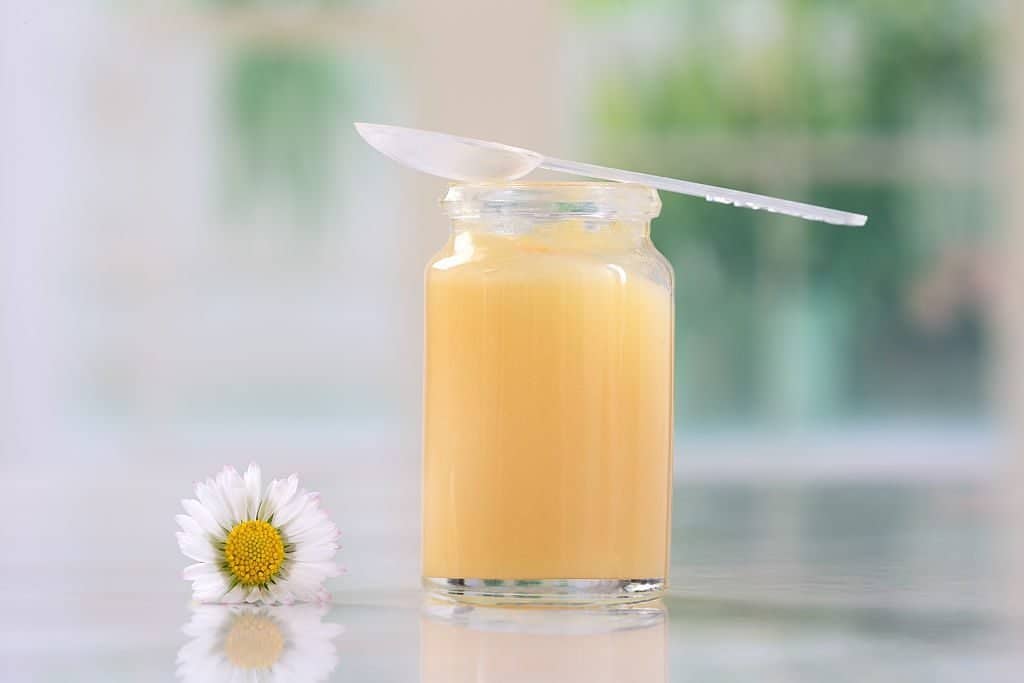
Royal Jelly is a milky-white, creamy substance produced by worker bees as a food source exclusively for the queen bee. It's rich in amino acids and B vitamins, and its unique nutritional profile is closely tied to the queen's fertility and long lifespan within the hive. Whether it has the same effect in humans is a genuinely open question – there currently isn't strong evidence either way.
Royal Jelly has been studied for antioxidant, anti-inflammatory and neuroprotective effects. Some animal studies, mostly in mice and rats, have looked at its effect on stress hormones, memory, and markers linked to Alzheimer's disease in the brain, with promising early results. It's important to be clear that these are animal studies, and results in animals don't reliably predict what happens in people. One small human trial combining royal jelly with ginkgo and ginseng found a cognitive benefit, but because it used three ingredients together, it's not possible to say royal jelly alone was responsible.
In short: it's a genuinely interesting area of ongoing research, not a treatment for Alzheimer's or any other condition, and we wouldn't want to suggest otherwise.
Royal Jelly comes fresh, freeze-dried, as a powder, or in soft gel capsules, and is sometimes combined with propolis or pollen. Some people find it a helpful part of their routine around menopause or their monthly cycle, though this is based on traditional use rather than robust clinical trials, so it's worth managing expectations, and speaking to your GP about any persistent symptoms.
Our Bumbles Royal Gellee is harvested and purified without freeze-drying, so it reaches you as fresh as possible, and is naturally rich in trans-10-hydroxy-2-decenoic acid (HDA), one of royal jelly's characteristic compounds.